Tartalomjegyzék
Kasmíri selyemszőnyeg csomózás
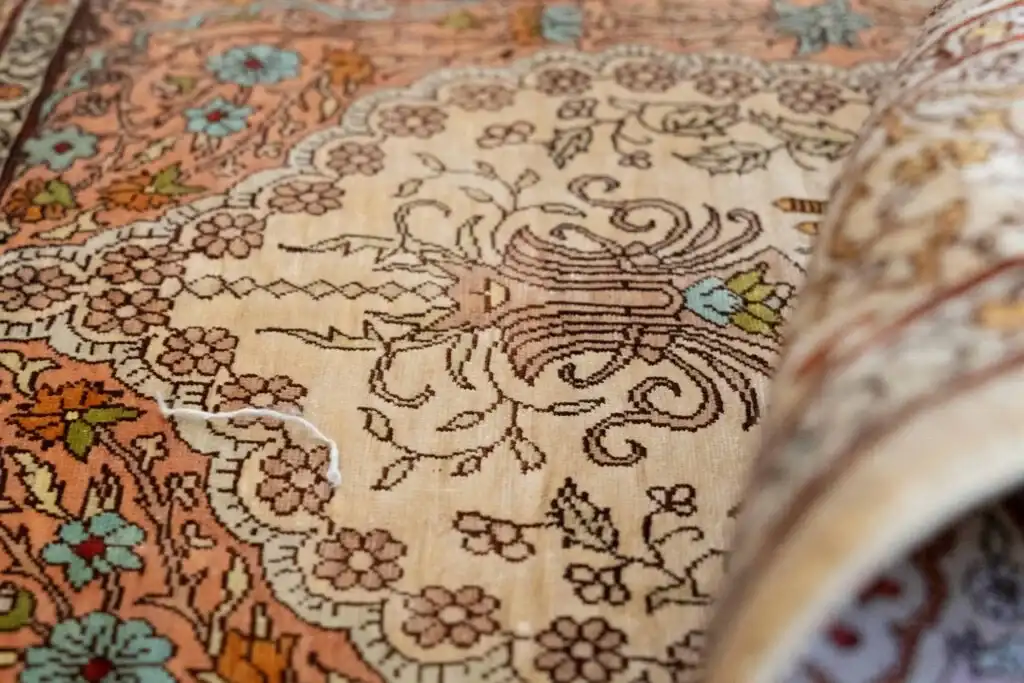
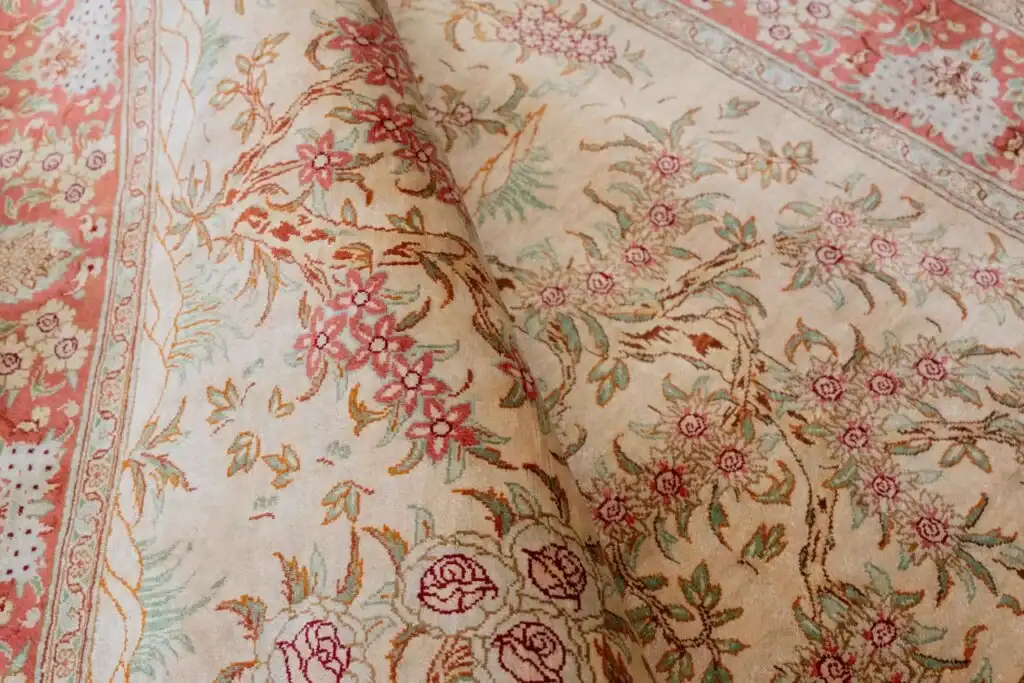
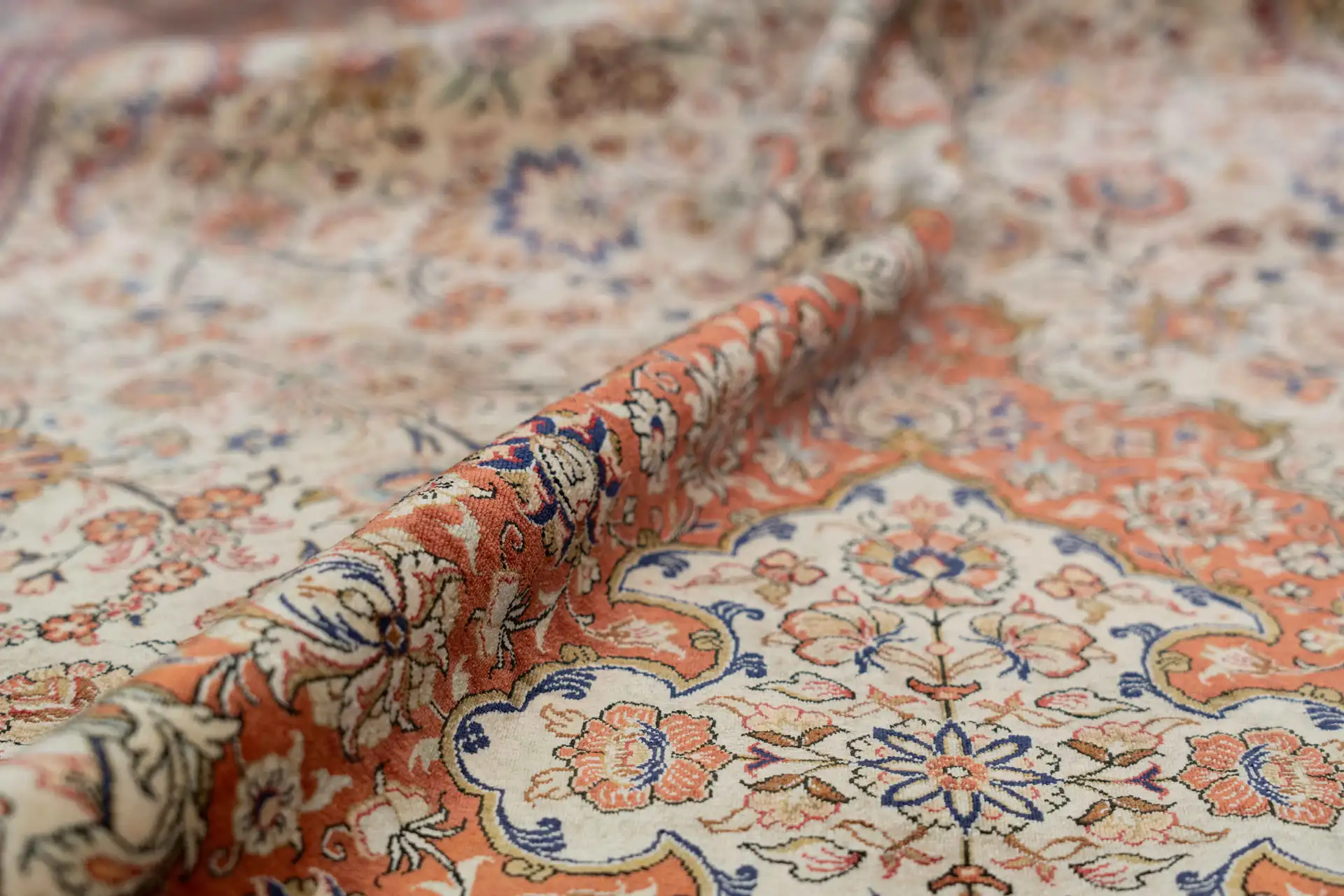
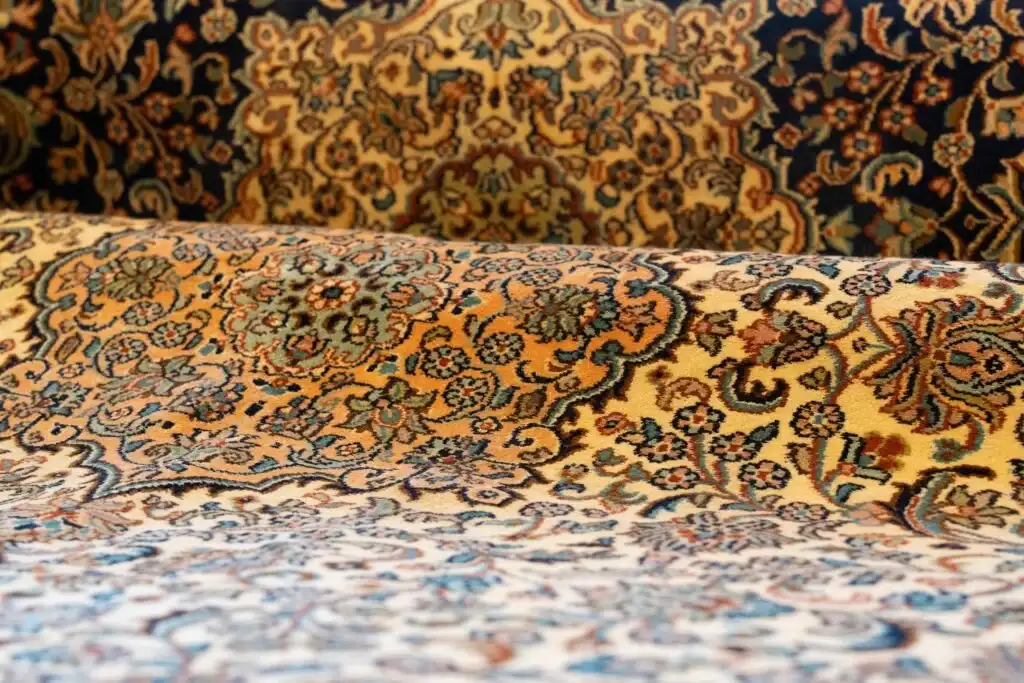
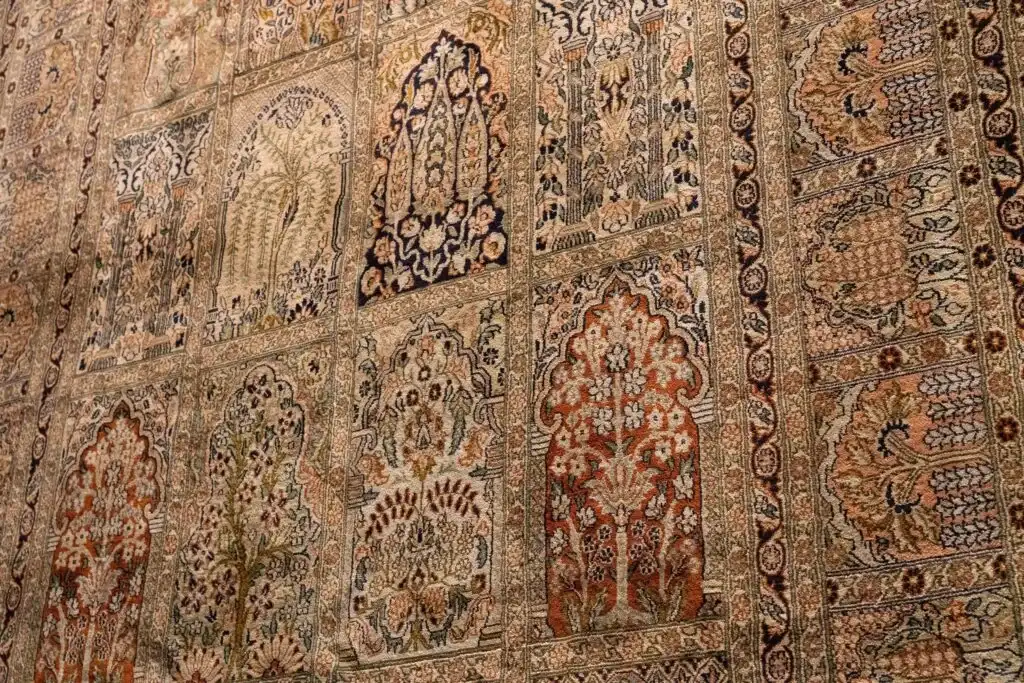
Kasmír gazdag szőnyegszövő hagyománya több mint négyszáz évre nyúlik vissza. Azonban csak a 19. század végén kezdtek el virágozni a régióban a kifejezetten szőnyegszövésre szakosodott műhelyek. Napjainkban India legkiválóbb kézzel készített szőnyegeinek jelentős része Kasmírból származik, a legszebb példányok pedig Srinagarban készülnek. A kasmíri minták nagymértékben a perzsa szövési hagyományokból merítenek. Ezek a részletgazdag mintázatok jellemzően egy központi medálion köré szerveződnek, sűrűn díszítve virágmotívumokkal, palmettákkal, indákkal és kacsokkal. A Kasmírban készült imaszőnyegek gyakran teljes felületükön finom virágmintákkal borítottak, és számos motívum a tradicionális kasmíri hímzések elemeiből is építkezik.
Anyagok
A szőnyegek elkészítéséhez gyapjút és selymet is használnak. A gyapjút jellemzően a csomózott felülethez választják, gyakran selyemmel kiegészítve, hogy gazdagabb textúrát és fényt adjanak a szőnyegnek. A tiszta selyemszőnyegek láncfonala lehet selyem vagy pamut, és a selyemláncú szőnyegek képviselik a legmagasabb minőséget. A legkifinomultabb selyemszőnyegeket teljes egészében selyemalapra szövik, amelyek rendkívül puha és fényűző tapintásúak. A gyakoribb, pamutláncú selyemszőnyegek csomósűrűsége 18×18 — körülbelül 500 000 csomó négyzetméterenként —, ami szilárdabb és merevebb alsó részt eredményez. Ezek a pamutalapú szőnyegek azonban nem olyan tartósak, mint a perzsa Qom vagy a török Hereke szőnyegek. Bár továbbra is vonzóak, nem olyan értékesek, mint a finomabb példányok, főként azért, mert mintaviláguk általában korlátozottabb.
A csomók sűrűsége
A prémium minőségű kasmíri szőnyegeket 24×24-es sűrűséggel — körülbelül 900 000–1 000 000 csomóval négyzetméterenként — szövik, selyemláncra, ami lágyabb tapintást és hosszabb élettartamot biztosít.
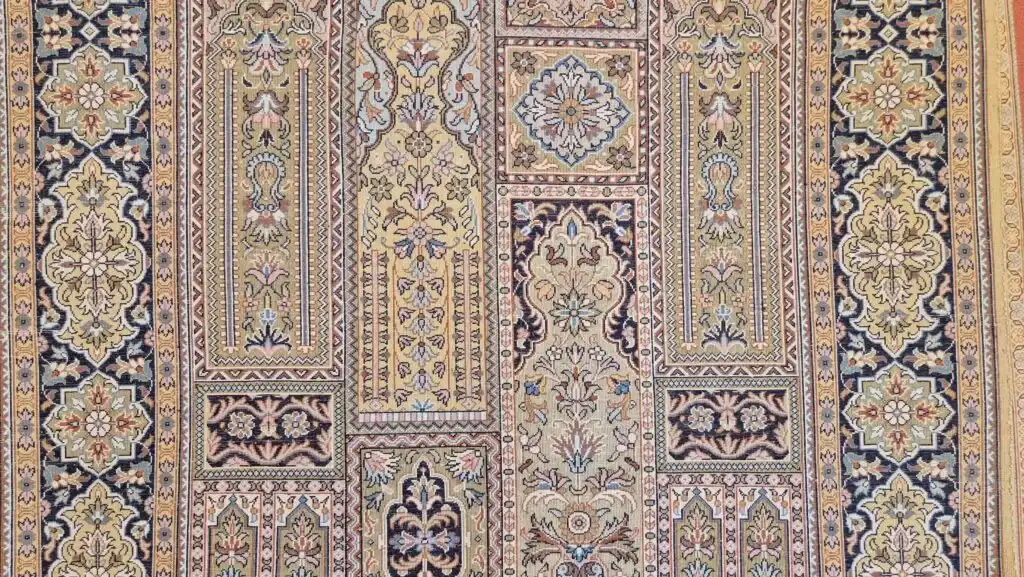
Fontos megjegyezni, hogy egyes kasmíri szőnyegkészítők szintetikus vagy „műselymet” (mercerizált pamutot) is használhatnak a selyem fényének utánzására. Az ilyen utánzatok nem számítanak igazi selyemszőnyegnek, és lényegesen alacsonyabb értéket képviselnek. Az autentikus kasmíri selyemszőnyegeket finomabb, pasztelles színvilág és lágyabb, kevésbé élesen megrajzolt minták jellemzik, mint az iráni Qom vagy a török selyemszőnyegeket. Mindezek ellenére a kasmíri selyemszőnyegeket szépségük, kézműves minőségük és változatos méretük miatt világszerte elismerik, így bármely gyűjtemény megbecsült darabjaivá válnak.